

Built it with AI? What happens when you outgrow Lovable, Base44 or Framer
AI builders are a quick way to start, but credits, limits and lock-in add up. How to move to code you own, and why experience still matters.
By Daniyaal6 min read
"Why would I pay a developer when AI can build my website for me?"
It's a fair question, and I hear a version of it more and more. Tools like Lovable, Base44, Framer and GoDaddy Airo can turn a few sentences into a working website or app in minutes. I use AI tools in my own work every day, and they genuinely make me faster.
But getting something on screen is the easy part. The questions that matter come afterwards: what it costs to keep changing it, what happens when it breaks, who owns it, and whether it actually helps your business stand out. This post covers what I see when people outgrow AI builders, and how to move on without starting from nothing.
What AI builders are genuinely good at
Credit where it's due. AI builders are great for:
- testing an idea before you spend real money on it;
- prototypes and demos to show a partner, investor or your team;
- simple pages that don't need to do much or change often.
If that's all you need, an AI builder may be the right tool. The trouble starts when the project becomes something your business relies on.
Where the problems start
These are the issues people bring to me most often.
- Credits run out. Most AI builders charge in credits. Every prompt, change and fix uses some, and fixing a stubborn bug can take several attempts.
- Costs creep up. A monthly plan, then extra credits, then a higher tier for features like custom domains, private projects, more users or code export. Some platforms also charge per site for hosting.
- You hit the platform's limits. Features that sound simple, like custom pricing rules, approvals, integrations with your other systems or proper user roles, can be hard or impossible inside a builder.
- AI fixes break other things. You ask for one change and the AI quietly rewrites something else. Without a proper history of changes, it's hard to see what happened or go back.
- Everything lives in one place. Your design, code, database and hosting all sit on the platform. That's convenient until you want to leave, the price changes, or the platform changes direction.

On that last point, version history matters more than most people realise. In professional development, every change is saved in a repository with a full history, so you can see exactly what changed, when and why, and undo it. Some builders offer this only on certain plans, some only partly, and some not at all. If your builder supports connecting to GitHub, switch it on from day one.
Can you move off? It depends on the platform
The good news is that you rarely have to throw everything away. How much you can take with you depends on the platform:
| Platform | Can you take your code? | What moving usually involves |
|---|---|---|
| Lovable | Yes. Your code can sync to GitHub. | Move the code to your own repository and hosting. The database often lives in a separate service such as Supabase. Keys and passwords aren't exported, so they're set up again. |
| Base44 | Partly. Reviews report that export focuses on the front end. | Bring across what can be exported, then rebuild the back end, data and logins on infrastructure you control. |
| Framer | No official export for hosting elsewhere. | Rebuild the design and content on code you own. |
| GoDaddy Airo | GoDaddy says code from its AI Builder can be exported. | Check exactly what your export includes, then move it and fill any gaps. |
Platforms change their features and plans often, so it's worth checking what yours includes today. I'll check this as part of reviewing your project.
What I learned building BookaSolutions
I've been through this myself. When I was developing the idea behind BookaSolutions, my booking platform for equipment and rentals, I tried building it in Lovable first.
It got the basics on screen quickly, but it couldn't do everything a real booking platform needed. So I took the idea into my own hands and built it properly.
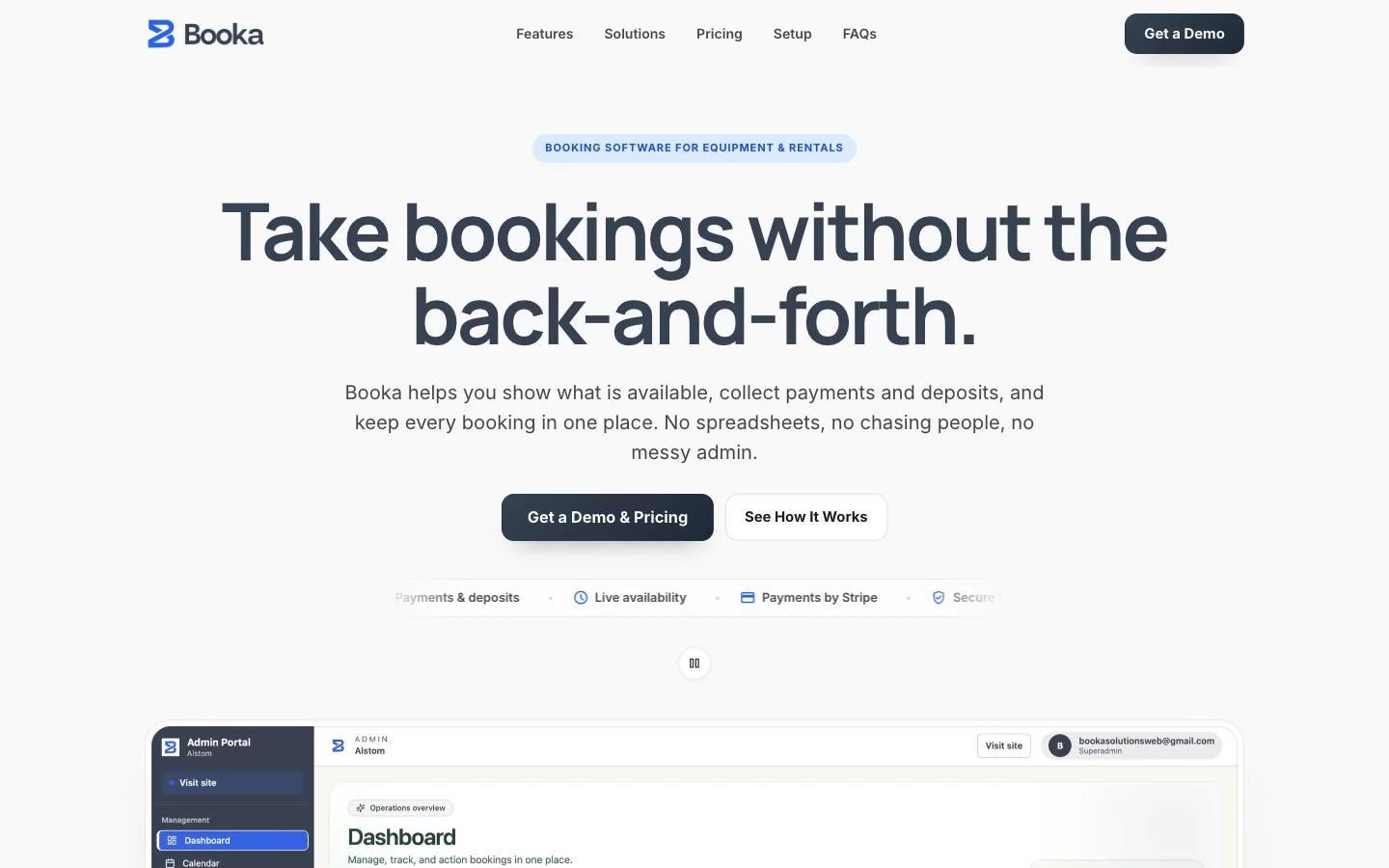
Today it's a live platform where organisations get their own branded booking page, with live availability, payments and deposits, flexible pricing rules, custom booking forms, collection and return steps, automatic emails and a staff dashboard. 1st Cathays Al-Huda uses it to hire out its equipment and vehicles.
The AI builder was useful for proving the idea. It wasn't the right place to build the business.
How I move a project off an AI builder
I've been advising people who've hit these limits, and helping some of them move their projects across. The process usually looks like this:
- Review. I look at what you've built, what it's costing you, and what the platform will let you take.
- Move or rebuild. Where you can export your code, I move it into a repository you own. Where you can't, I rebuild it properly.
- Fix and tidy. Bugs, broken features, security (keys and passwords set up properly), speed and SEO.
- Make it yours. Design and branding that look like your business, not a template.
- Host it affordably. Hosting you control and only pay for what you need, with no credits to top up. This website runs the same way.
- Keep building. New features on top, using AI where it speeds things up, with every change saved and reversible.

"You charge too much. AI can do it for me."
AI can produce a website. What it can't do on its own is take responsibility for it. Before you decide, ask yourself these questions.
What happens when something breaks? With an AI builder, you prompt until it's fixed or your credits run out. With a developer, someone who understands how it all fits together finds the cause and fixes it properly.
Does it look like you? Visitors are getting good at spotting websites that look AI-made: the same layouts, the same phrases, the same stock look. If your website looks like everyone else's, why would a customer trust you over them?
Does it make you stand out? Almost any idea you have already exists somewhere online. You don't win by existing; you win by being better and being recognisable. That's the difference between a brand people remember and a website nobody finds unless someone recommends it. Part of my work is advising clients on how to stand out from their competitors, not just building pages.
What's the plan after launch? Building the website is the easy part. Have you thought about how people will find it, how it will turn visitors into enquiries or sales, and how it will grow with you? That takes thought about SEO, marketing and the whole customer journey.
That's where years of experience in development, coding, databases, design and branding count. You're not paying for the typing. You're paying for the decisions.
AI is a tool. Ownership is the point.
AI is getting more powerful every month, and that's a good thing. Once your project is on code you own, you can still use AI to build more on top of it, without being tied to one platform's credits, limits or pricing. You get the speed of AI and the safety of a proper setup.
If you've built something with Lovable, Base44, Framer, GoDaddy Airo or a similar platform and it's starting to hold you back, see how I can help or tell me about your project. I'll tell you honestly what can be moved, what's worth rebuilding, and what it would take.